Material · October 2026
Musk in perfumery: from the musk deer to modern white musk
The history of musk, why natural deer musk is no longer used, how muscone and synthetic white musks replaced it, and why musk pairs so well with oud.
Where the word musk comes from
The word musk travelled from Sanskrit muṣka through Persian, Greek and Latin into European languages. Historically, musk referred to a secretion collected from a gland of the male musk deer (Moschus species) of the Himalayas, Central and East Asia. Dried "musk pods" were traded along the Silk Road and were worth more than their weight in gold.
Musk in history and culture
Musk was treasured in Chinese, Indian, Persian and Arab cultures. Hadith in Sahih Muslim describe musk as the finest of perfumes, and medieval scholars including al-Kindī and Ibn Sīnā (Avicenna) wrote about it in perfumery and medicine. According to historical accounts, musk was even mixed into the mortar of some mosques so that their walls would release fragrance in the heat of the sun.
Why natural deer musk is no longer used
Hunting for musk pods drove several musk deer species into decline. Musk deer are protected under CITES — some populations in Appendix I and the others in Appendix II — and natural deer musk has effectively disappeared from mainstream perfumery. Modern musk perfumes are therefore made with synthetic musk molecules or, occasionally, plant-based musky materials such as ambrette seed (Abelmoschus moschatus).
Muscone and the chemistry of musk
The main odorant of deer musk, muscone, was isolated in 1906, and its unusual large-ring (macrocyclic) structure was established by Leopold Ružička in the 1920s — work that contributed to his Nobel Prize in Chemistry in 1939. Since then, chemists have developed several families of synthetic musks: early nitro musks (now largely restricted), polycyclic musks such as galaxolide, and macrocyclic and alicyclic musks that are prized today for their clean, skin-like warmth.
What "white musk" really means
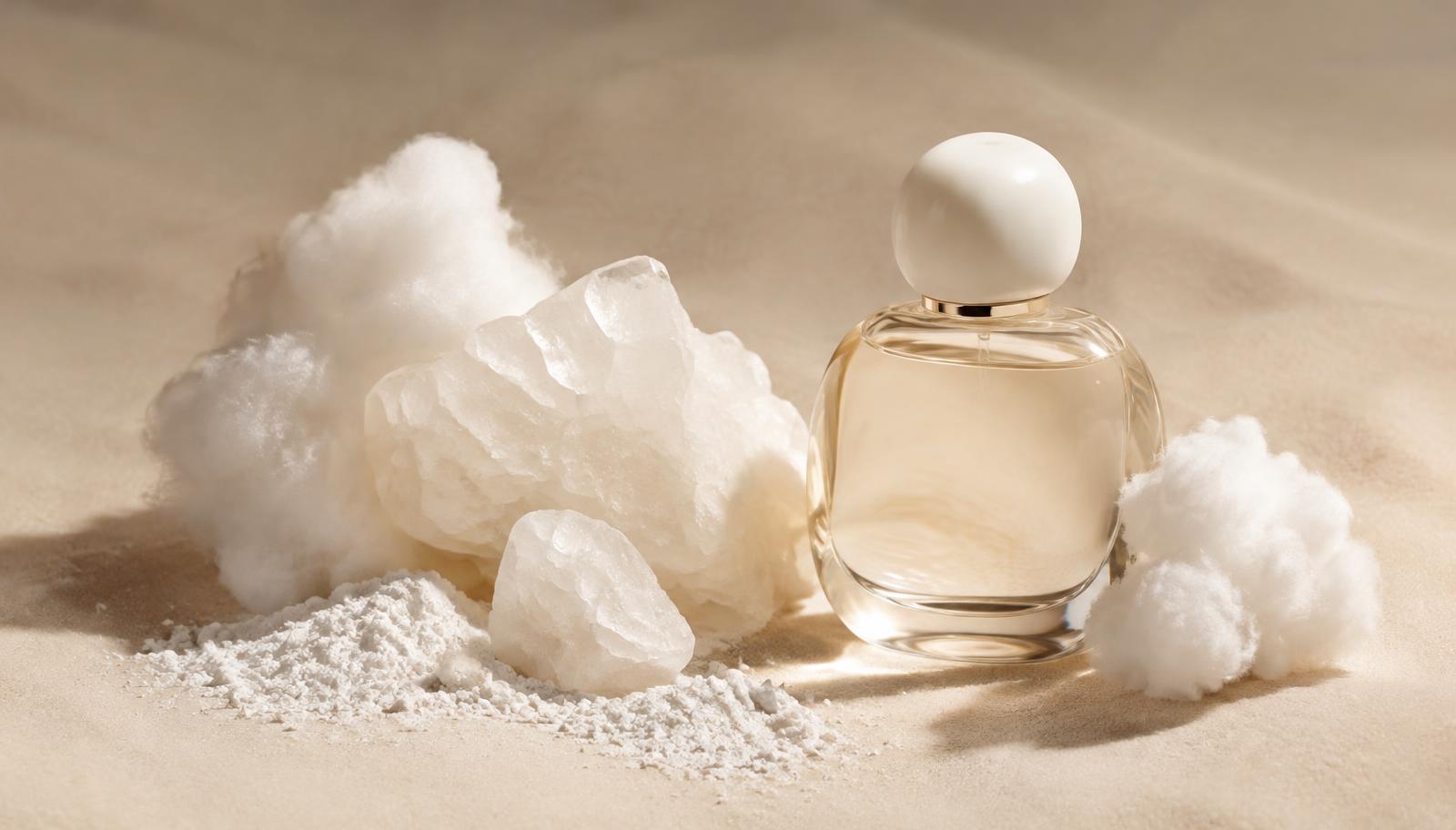
White musk is not a single ingredient but a style: a soft, clean, slightly powdery musk accord built from synthetic musk molecules, often evoking freshly washed cotton or warm skin. Musks are large, relatively heavy molecules that evaporate slowly, which is why they are typically used as base notes that add longevity and softness to a perfume.
Why some people cannot smell musk
Specific anosmia — the inability to perceive a particular odour — is especially common with musks. Some people barely notice certain musk molecules while others find them intense. This is why perfumers often combine several different musks in one composition, so that the effect is perceived by more people.
Oud and musk: a classic pairing
In Arabian perfumery, oud and musk have been worn together for centuries, and modern niche perfumes continue the tradition. The smooth, enveloping softness of musk rounds off the darker, smoky and leathery facets of oud, while oud gives musk depth and character. In oud and musk perfumes and oils, musk usually forms the lasting base on which the agarwood rests.